
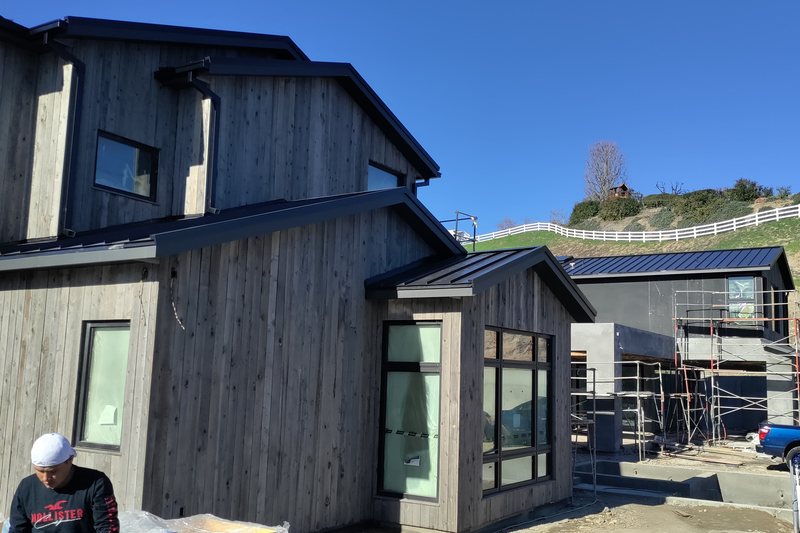
Tile roofs in Culver City, CA: clay, concrete, and slate
Tile Roof Repair and Lift-and-Relay in Culver City
Ceiling stains show up while the tile above them still looks intact. Underlayment and flashing do the waterproofing, so tile work starts one layer down. Call us with what you see inside, and we will talk through the likely causes with you.
On a tile roof the leak usually starts at a worn underlayment sheet or a failed metal joint. From the street the tile over that spot still looks fine. A cracked piece is only one of several causes, so we check the layers before we price anything.
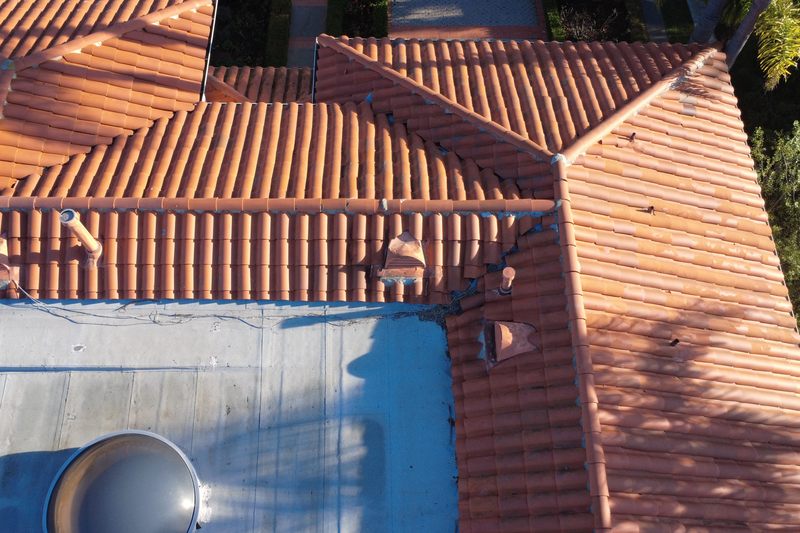
Where tile roofs leak
Tile problems may start below the visible surface
Underlayment is the sheet over the roof deck, and it stops the water that gets past the tile. Shaped metal flashing seals the valleys, wall lines, and pipe penetrations.
Slipped or cracked tile still matters, because every gap leaves the sheet below exposed to sun and water. We pull a few tiles in the suspect area to see what the layers underneath look like. How we trace and repair a tile leak starts with that look.
In Culver City, most of the rain falls in a short winter stretch after a long dry summer. A slow leak can sit hidden through all of those dry months without leaving a mark.
Water rarely lands on the ceiling directly below the opening in the roof above it. It runs along the underlayment or a rafter first, then drops where the framing lets it. So tell us when the stain appeared and whether it grows during rain.
Lift-and-relay preserves suitable field tile
Field tile means the tile across the main roof planes of your house. In a lift-and-relay, we remove that tile, stack sound pieces aside, then replace the underlayment and flashing. Then we reset your original tile and add new pieces where old ones broke.
Lift-and-relay works when most of the field tile survives the removal, the handling, and the stacking. Sound clay and concrete pieces usually make it, though a few always break, so the scope should list replacement tile. Tile can outlast the underlayment beneath it by decades, so a leaking tile roof often does not need replacing.
On many tile roofs the underlayment needs attention long before the tile itself does. Get both a relay price and a full replacement price when your roof reaches that point.
Rot in the decking is the surprise owners least expect on a tile job. Nobody can see every soft board while the tile and the underlayment still cover it. When we find rot, we show you the area and price the repair before we close it up.
Culver City lists re-roofing among the projects that need a Building Safety permit. We help property owners pull permits for applicable work on the roof. Read that page for the current requirements that apply to your project.
The roof itself sets the price. Size, pitch, the number of stories, and the condition of the deck all move the number. Call us with the property address, and we will start a free estimate for the work.
- Agree on the replacement-tile count in writing before we lift a single piece.
- We take the sound tile off in sections and stack it aside for reuse.
- We strip the old underlayment off the roof deck and clear the surface.
- Where the deck no longer holds a fastener, we replace the damaged sheathing.
- We lay new underlayment across the exposed area and renew the flashing details.
- We set your original tile back and fill the gaps with matching new pieces.
Underlayment and flashing form the waterproof layer
Underlayment handles the water that gets past the tile, and flashing closes the joints underlayment alone cannot cover. Sun, heat, and foot traffic wear both of them down over the years. Valleys wear fastest, because two roof planes push their runoff through one channel.
Read the written scope for the underlayment product and the exact roof area it covers. A patch under one valley and a full-slope replacement produce very different results.
Old flashing left in place can undo brand-new underlayment, so the scope should name the metal too. Ask us which pieces we replace and which ones we reset.
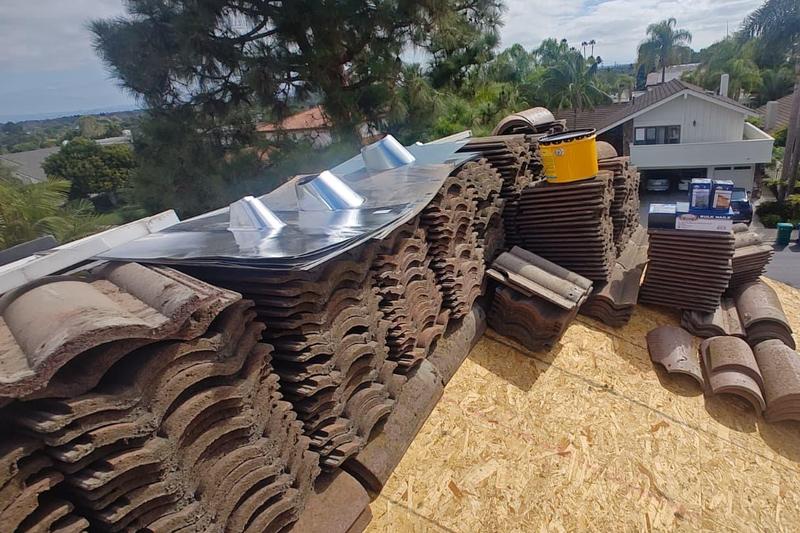
Walking on tile breaks pieces, so we step where the tile carries the weight. Some breakage still happens on any tile roof, no matter how careful the work is. We plan for that and set replacement pieces as we go.
Wind pushes rain sideways under the lower edge of a tile roof during a storm. Underlayment and metal have to close that path, because the tile alone cannot. The same holds where a wall or a chimney meets the roof surface.
- Valleys, where the runoff from two roof planes meets
- Wall and chimney lines with metal turned up behind stucco or siding
- Vent and pipe penetrations that break the run of the sheet
- Eaves and rakes exposed to wind that pushes rain back under the tile
- Skylight curbs and other framed openings built into the roof deck
- Transitions where a tile plane meets a low-slope or flat section
Clay and concrete tile change the fasteners and the framing load
Clay and concrete pieces differ in shape, thickness, and weight, and they lock together in different ways. Those differences change the fasteners, the battens, and the way we handle each piece. They also raise weight and framing questions that we settle before any tile order goes in.
Battens are the wood strips that some tile systems hang on, and not every roof uses them. The profile of the tile decides how the pieces overlap, and that changes how much we can reuse.
Match the replacement pieces to what is already on the roof when the field tile stays. A mixed profile leaves gaps that the underlayment then has to handle alone. If your house mixes tile with other roof sections, see how we approach a whole Culver City roof.
Tile is heavy, so the load on the framing is part of every tile plan. Moving to a heavier profile can raise framing questions on an older house. We settle those questions first, rather than after the new tile arrives on site.
Ask for the tile type, the fastening method, and the underlayment in one written scope. Those three lines tell you more about the job than any product name does. Read them closely before you approve tile work on your Culver City home.
Slate, handled as tile
Slate roofs and how we repair them
Slate repairs work the same way tile repairs do, because the layers underneath stop the water. The work follows the tile order: open the area, renew the layers, then set the sound pieces back. Tell us about the slate when you first describe the roof to us.
Slate breaks differently than tile does, so the handling and the fasteners both change. Tell us whether the roof is slate or tile before we talk about the repair.
Describe the broken pieces and the run of slate around them when you call. Note any staining you have seen on the ceiling below that part of the roof. A short conversation usually gives us enough detail to start pricing the work.
A free estimate prices the tile or slate work you want done. A detailed written inspection report is a separate service, and it is not free. Ask us on the call which one you actually need.
We work on clay, concrete, and slate tile roofs, and we do the work ourselves.
Call us to talk through your tile roof and get a free estimate for the work. Sending the details in writing works too, though the form takes plain text only. Either way, give us the address, the tile type, and what you have seen inside.
Frequently asked questions
Where do tile-roof leaks usually start?
Usually one layer down, at a worn underlayment sheet or a metal flashing joint. Valleys, wall lines and pipe penetrations are the common spots. The tile above them can still look sound from the street.
What happens during lift-and-relay?
We agree on a replacement-tile count first, then lift the sound tile in sections and stack it aside. Next we strip the old underlayment, replace any sheathing that no longer holds a fastener, and renew the flashing. Your original tile goes back on, with matching new pieces filling the gaps.
Why can a tile roof leak when the tiles look intact?
Because the underlayment and the flashing do the waterproofing, not the tile itself. Sun, heat and foot traffic wear both down over the years. Valleys go first, since two roof planes push their runoff through one channel.
Local roofing contact
Culver City Roofing Contractors
Culver City Roofing Contractors
Culver City, CA
(424) 672-3864
Open daily from 8 AM to 8 PM.