
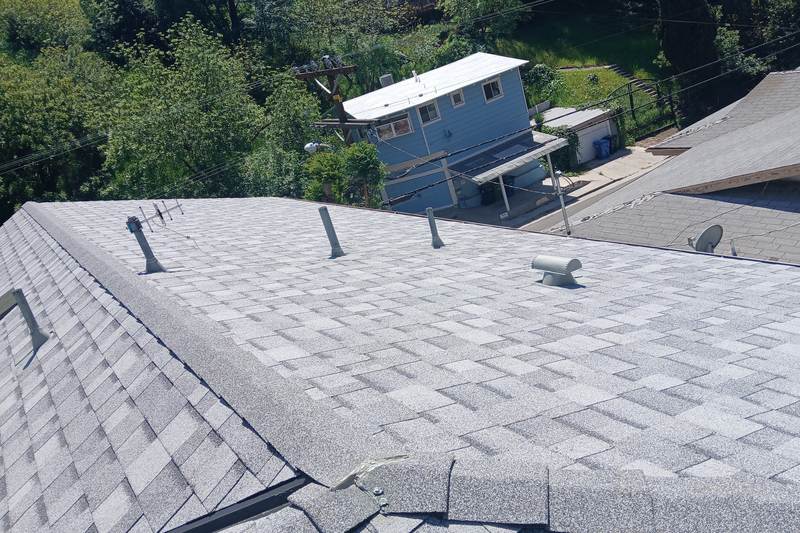
Commercial roofing in Culver City, CA
Commercial Roofing Services in Culver City, CA
Commercial roof trouble usually starts as a ceiling stain or a call from a tenant. Most of that work is repair on flat and low-slope systems, or TPO on occupied buildings. Start with how the building operates and where the water leaves the roof.
Commercial roof decisions start with how you use the building every day. Tell us who your tenants are, your business hours, the parking, and the rooftop equipment. Roof access and scheduling depend on that picture, and the repair or replacement scope follows it.
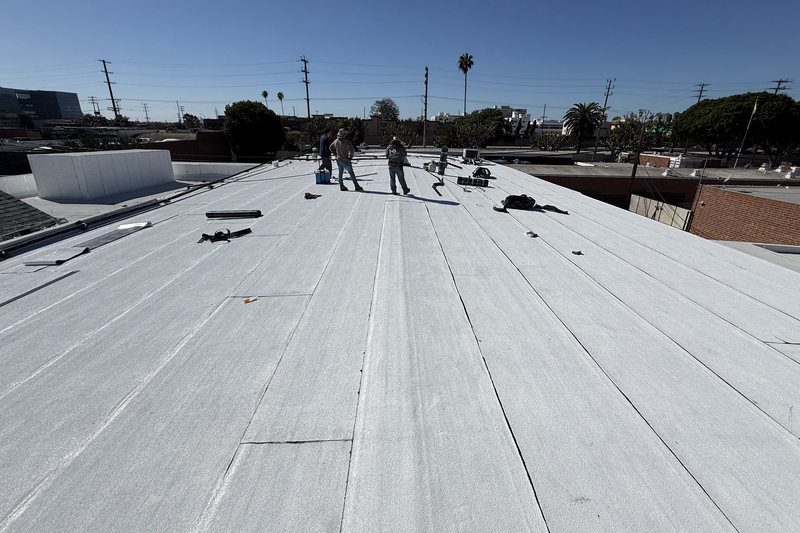
Operations first
Start with how the building runs day to day
An occupied building sets limits that a roofing plan has to respect. A grocery tenant, a medical suite, and a warehouse each need different protection below the working area. Describe what sits under the roof deck, because that shapes the work plan.
Count what sits on the roof before you describe the leak. Skylights, antenna mounts, and any unit bolted through the deck each add a joint that can separate. List what you can see from a window or a hatch, even if you cannot identify it.
Roof access shapes the schedule on a commercial building as much as the repair itself. Tell us where the ladder or hatch sits and who controls that space. Parking, loading zones, and gated lots all change how we stage a work area.
Most commercial roof calls start with a repair question, because a repair keeps the tenant space open while we work. We talk about replacement later, when the same roof keeps failing in new places.
Tell us about the roof work this building has had before. Owners often remember which tenant complained and which areas they closed, which tells us where to plan protection first.
- The daily use of the space and its busiest hours
- Interior areas that need protection while roofing work happens overhead
- Roof access points, hatches, ladders, and who holds the keys
- Rooftop equipment that our team has to work around
Commercial roof repair starts with the leak path
A commercial repair begins at the interior stain and works back to the detail that let water in. We check penetrations, flashing, drains, and seams, then rebuild the one that failed. The sound membrane around it stays in place, which keeps an occupied building open while we work.
Record the ceiling grid square or joist line where the stain shows. Then measure the same distance on the roof above it, because that gives us a place to start looking.
Water rarely enters where the stain appears, because it travels along the deck first. A stain near a column can start at a curb many feet away. So we look at the whole area above the wet spot, not one point.
Pipes, curbs, drains, and seam laps all move with heat and age. We open each one, then rebuild the joint that failed. How we scope a leak repair walks through the same path on a house.
Tell us what changed on the roof before the leak started. New equipment, a fresh penetration, or recent work above the ceiling all narrow the search. Old repairs matter too, since those details often move again.
A repair has to hold through the next storm season, not just this week. We rebuild the failed detail instead of covering it up, because winter storms here test every repair and patch.
- Note where the stain sits and the nearest beam, joist line, or ceiling grid.
- Walk the roof area above and mark penetrations, seams, and standing water.
- Check every drain and scupper on the roof for blockage or slow flow.
- Call us with those notes and the tenant space involved.
- We repair the failed detail, then recheck the same area after the next rain.
Drainage
Drainage decides what a flat or low-slope roof needs
Flat and low-slope roofs drain slowly, so water sits on the surface long after the rain stops. Look at where the roof slopes and where the drains and scuppers sit. Then watch how fast the surface clears, because drain maintenance often decides the repair plan on an occupied building.
A low-slope roof moves water with a shallow pitch and a drainage layout. When either one stops working, water stands in the low spots and puts pressure on the seams. Standing water after a storm points at one of those two problems.
Debris causes many low-slope problems on buildings that sit near trees or taller structures. Leaves and grit gather at the drains, so clearing them can change what the roof needs. How a flat roof sheds water explains what to look for on your own building.
Drains and scuppers work only when the path stays clear, since sediment turns a working drain into a barrier. We clear the outlets first, then judge whether the surface still holds water.
Ponding tells us where the roof has settled or where a drain stopped keeping up. Note the wet outlines a day or two after the rain stops, since they show where to probe first.
Torch-down modified bitumen is our usual low-slope system on this kind of roof. We heat-weld the cap sheet, so the laps close into a continuous surface. We match the system to the deck, the drainage, and the traffic the roof takes.
System fit
When TPO belongs in the discussion
TPO is a single-ply membrane supplied in wide sheets with heat-welded seams. It suits open low-slope areas, so it belongs in a full replacement discussion rather than a patch. Roof size, penetration count, drainage, and the existing surface all decide whether TPO fits the building.
A roof crowded with curbs and equipment needs far more detail work at every joint. So a wide, open roof and a crowded one rarely land on the same system.
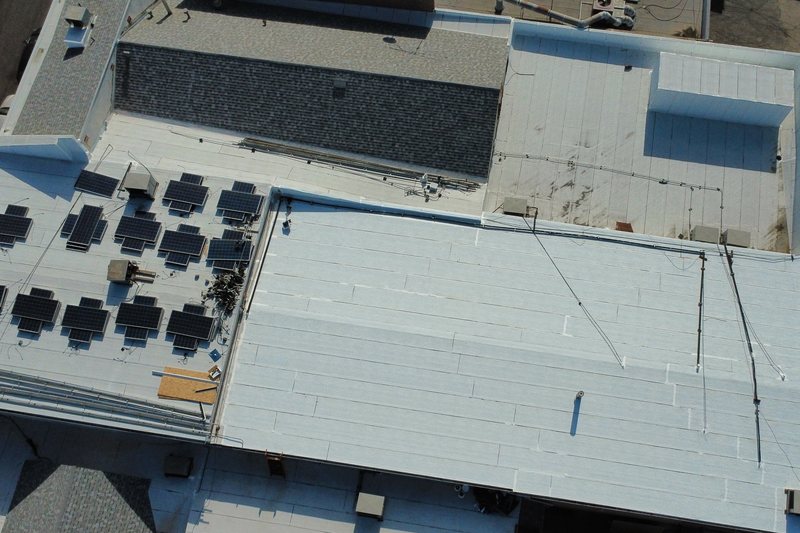
We install TPO, and we also weigh what later repairs will take. In our work, TPO repairs cost more and take more skill than a torch-down patch. On a building with many penetrations, that difference matters over the roof's life.
Name your current surface when you call, since that saves a round of questions. Add the roof's age when the building records show it. A closer look at TPO welds and flashings can help you recognize your own surface.
Gather the drawings or roof records if the building has kept them. A deck plan, an old permit, or a past repair invoice tells us what sits under the surface. Without those records, we read the roof from the top and from the ceiling below.
A membrane choice also depends on what the roof already carries. Insulation, an old coating, or a second layer changes what we can install over it. We tell you when a tear-off makes more sense than another cover.
- Total roof area and how much of it runs uninterrupted
- Curbs, pipes, and rooftop units the membrane has to seal around
- Condition of the deck and insulation under the current surface
- Whether the drainage layout still moves water off the roof
- How often people walk the roof to service equipment
Estimate or documented inspection
Start with who will read the paperwork, since an owner reviewing costs needs a different document than a tenant. Tell us which of the two you need when you call. The free estimate covers the work itself, and the paid written report covers the roof's condition.
On a tenanted building, the written report usually goes to a property manager or an owner who never climbs up. They use it to schedule work, settle a repair argument, or budget for next year. Keep a copy of that report in the building file.
The report's fee changes with the roof's size and the number of stories. Ask us for the current figure when you call, because a free estimate stays free whatever the building needs. What a paid inspection report covers is worth reading before you order one.
We can often price commercial repair work from satellite imagery and the details you give us. That saves an extra trip for a building that already runs on a tight schedule. We ask for more detail when the scope grows, so the estimate holds up.
Permit requirements change with the project and with the City's current regulations, which Culver City Building Safety publishes. We help property owners pull permits for applicable work, starting from the City's building permit application. We check the current permit path with the City before that work starts.
Call us first, because a short conversation with our roofing team settles most commercial roof questions. Send the building details in writing when a call does not fit your day.
Frequently asked questions
What should a commercial roof evaluation cover?
It starts with the building's daily use, its busiest hours and the tenant space under the roof. Then we look at roof access, rooftop equipment and every joint bolted through the deck. Past roof work and past tenant complaints tell us where to plan protection first.
How is a commercial roof leak repaired?
Note the ceiling grid square or joist line where the stain shows, then measure that distance on the roof. We walk the area above and check penetrations, seams, drains and standing water. Then we rebuild the joint that failed and recheck it after the next rain.
When is TPO considered for a commercial property?
It comes up on wide, open low-slope roofs with few curbs and units to seal around. A crowded roof needs more detail work, and in our work TPO repairs require more skill than a torch-down patch. We weigh the deck, the insulation and the drainage before recommending it.
Local roofing contact
Culver City Roofing Contractors
Culver City Roofing Contractors
Culver City, CA
(424) 672-3864
Open daily from 8 AM to 8 PM.