
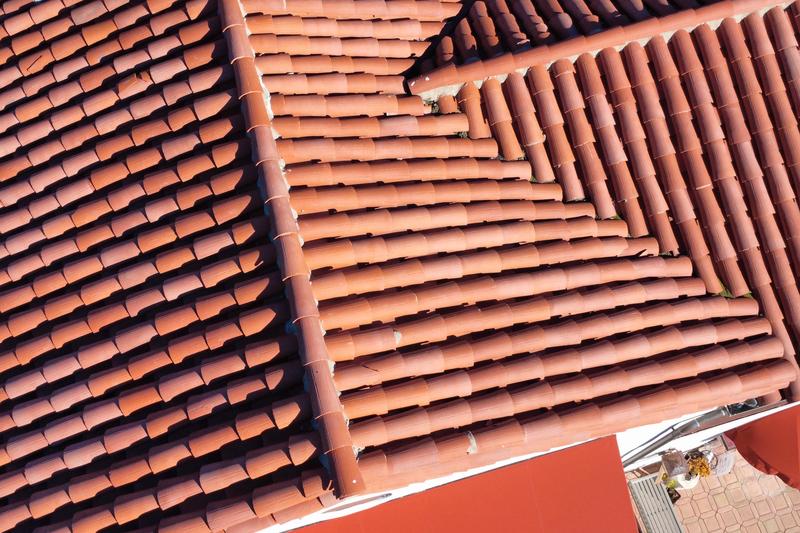
Flat and low-slope, Culver City, CA
Flat and Low-Slope Roofing in Culver City, CA
Water leaves a low-slope roof through a small number of outlets, usually drains or scuppers. Almost every repair question comes back to where the water collects and how it gets off the roof. Call us, tell us what you are seeing, and we will take it from there.
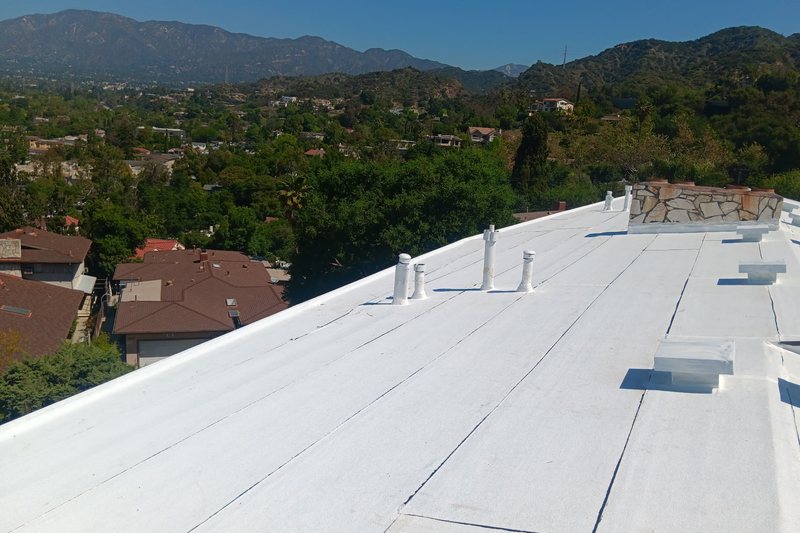
Locate the outlets first: the drains or scuppers that carry water off the roof. A low-slope roof still has a slight pitch, and it steers water toward those openings. Water stands when an outlet sits higher than the surface beside it, or when a blockage closes that exit.
Start with drainage
A flat roof still needs a clear water path
Ponding usually points to a low area, a blocked outlet, or a drain sitting too high. Each of those problems needs a different repair, and guessing only wastes a trip up the ladder.
Debris is the other common cause, and it collects right around the outlet. Leaves, grit, and loose gravel settle into the standing water and eventually block the drain. Clearing that path is part of the repair, not an extra.
Many buildings pair a low-slope section with a pitched roof directly above it. Water from the pitched area lands on the flat section, so that junction carries the heaviest volume.
Nearly all of our rain falls inside a short winter stretch. A slow leak can run quietly for months, then show up all at once in one storm. We hear about far more flat-roof leaks after that first heavy rain.
- Open membrane carries the water across the roof toward a drain or scupper
- Low areas hold water long after the surrounding roof dries
- Drains and scuppers are usually the only ways water gets off the roof
- An overflow outlet takes over when the main drain blocks
Penetrations and edges concentrate repair decisions
Most flat-roof leaks begin exactly where something interrupts the membrane. Pipes, drains, curbs, skylights and equipment supports all pierce that surface and need a properly detailed wrap or flashing. Parapet walls and open roof edges are the other place these leaks start.
A low spot beside a drain can hold water against a seam for days. Water sitting that long finds any lap that never bonded properly. Following it back to that lap is where our leak repair work begins.
Flashing seals the joint where the roof meets a wall or a raised curb. That joint starts more low-slope leaks than almost any other detail. We check it early on every low-slope roof.
A parapet wall needs its own detail where the membrane turns upward and stops. Water finds that upper edge whenever the cap flashing loosens or separates. Edge metal does the same job along an open roof edge.
People add equipment after the roof goes on, and every anchor punches another hole. Crews often place mounts, conduit, and condensate lines on the membrane without detailing the new penetrations. We always check those later additions when a low-slope roof leaks.
Torch-down basics
Torch-down roofing for low-slope roofs
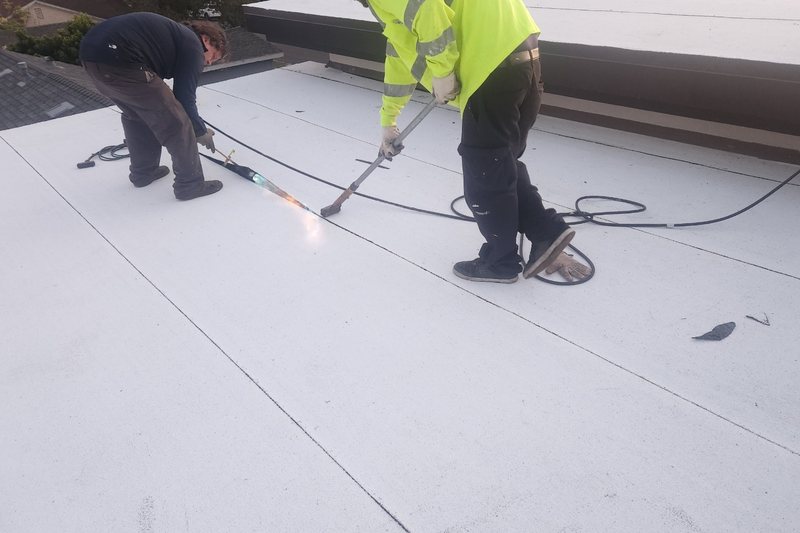
Torch-down roofing uses modified bitumen sheets that arrive on the roof in large rolls. A torch melts the underside, so every seam bonds into one continuous surface that keeps water out of the laps. The decking and the roof layout determine whether that system suits your building.
Torch work brings an open flame onto the roof, so preparation always comes first. We dry and clean the surface before we start any part of the work. We keep the flame safely clear of vents, edges, and any material that might ignite.
The deck under the membrane decides a lot about the job. Rot in those boards is the most common change order we write. So we check the decking carefully before any new sheet goes down.
Existing layers matter too, because each one adds weight and hides the deck. A tear-off strips the roof back to the original boards. An overlay leaves the old surface in place, and that does not work on every roof.
Not every low-slope roof suits a torch-applied system, and roof access is one part of that decision. Nearby vents, dry material, and the people in the building below matter just as much.
- Confirm the deck and existing layers can accept a new system
- Clear the surface and prepare drains, curbs, and edges
- Roll and bond the base and cap sheets across the field
- Detail the penetrations, walls, and terminations last
One leak or several
Repair or replacement depends on more than one leak
One leak usually means repair, especially when the membrane elsewhere still looks sound. That decision changes when the water has nowhere to go. A roof that ponds in the same places every rain needs drainage correction before we price a new membrane.
Repeated patches in the same area point beyond the surface itself. When one spot needs the same repair season after season, the assembly underneath deserves a closer look. What a full replacement involves is usually the next conversation.
Flat roofing has no set price, because the work in front of us drives the number. Roof size, stories, deck condition, drainage corrections, and existing layers all move it. A free estimate is how you get a real figure.
Our estimate for the roofing work is free, while a detailed written roof report remains a separate paid service. Its fee depends on the particular roof, so ask us during the call.
Settle the scope first, because the scope decides which permit rules apply. We help property owners pull permits for applicable work. The City's list of projects that need a Building Safety permit shows where your job lands.
What a low-slope scope should list
A low-slope scope should list every part of the job line by line. Name the deck repair allowance, the insulation, the drainage correction, and every termination at walls and edges. TPO is one membrane option on that list, and we cover its seams, drains, and edges separately.
Torch-down and TPO solve the same drainage problem with different materials. That comparison gets easier once we know the roof size and how we get up there. Equipment already sitting on the roof shifts it as well.
Send the building type, the roof size if you know it, and what you are seeing. Those details let the follow-up call move straight to the roof itself. If tenants stay in the building during the work, our commercial page covers that side of it.
Calling is still the fastest way to give us those details. Send them in writing instead when a call does not fit your day. The form takes text only.
We handle flat and low-slope work here, from a single leak to a complete replacement. Call us whenever you are ready to price the project.
Frequently asked questions
What are common causes of flat-roof leaks?
Standing water beside a drain, an unbonded lap, and a loose cap flashing on a parapet head the list. Anchors, conduit and condensate lines added after the roof went on open more holes. We check those later additions on every low-slope leak.
Can a flat roof be repaired instead of replaced?
Often yes, when one leak shows up and the membrane elsewhere still looks sound. Repeated patches in the same spot point at the assembly underneath instead. A roof that ponds every rain needs the drainage corrected first.
What should a low-slope roofing scope list?
It should name the deck repair allowance, the insulation and the drainage correction, line by line. Every termination at a wall or an edge belongs there as well. The membrane itself, torch-down or TPO, is one more line on that list.
Local roofing contact
Culver City Roofing Contractors
Culver City Roofing Contractors
Culver City, CA
(424) 672-3864
Open daily from 8 AM to 8 PM.