
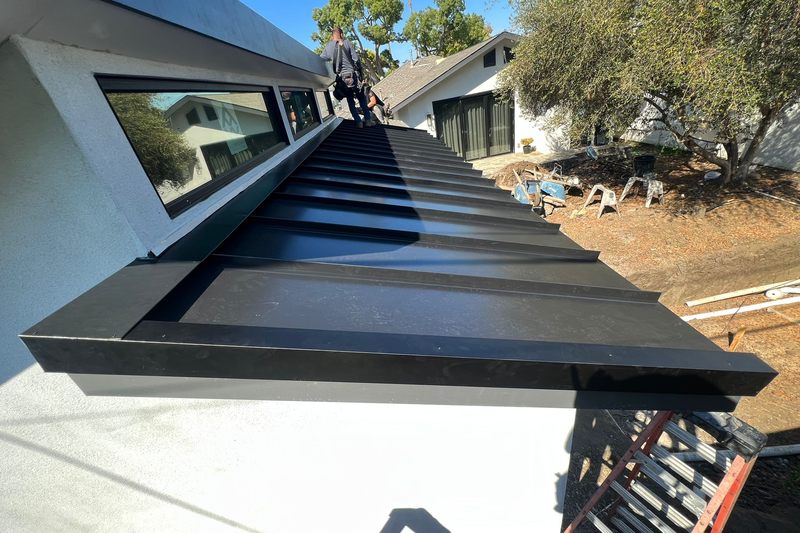
TPO roofing in Culver City, CA
TPO Roofing for Culver City Commercial Properties
TPO is a single-ply membrane used on flat and low-slope commercial roofs. Its condition decides whether a roof needs a targeted repair or a full replacement. We evaluate, repair and replace TPO on commercial properties in Culver City.
Call us for a free estimate, or send the form.
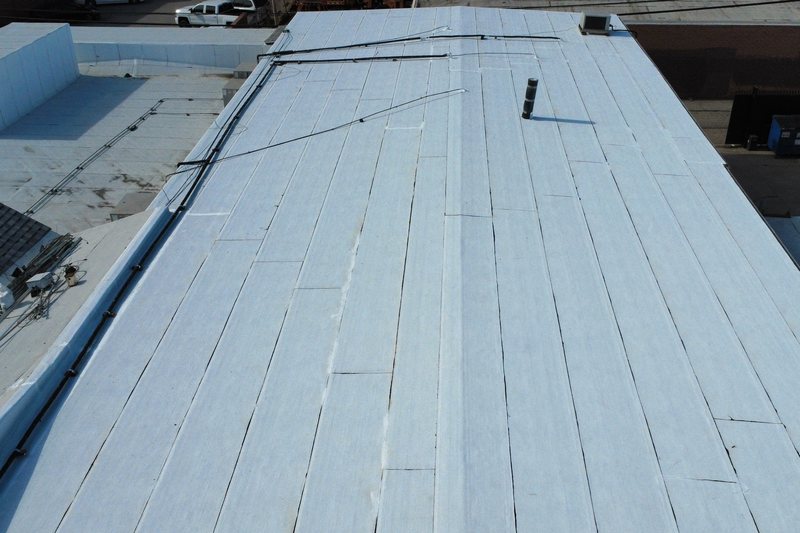
We weld TPO sheets together with heat, so the membrane covers the roof as one surface. Each weld has to perform as well as the sheet beside it, because an open weld spreads water underneath. We treat the welds as the system, not as a minor detail.
Membrane basics
TPO works as a connected membrane system
A membrane roof holds water across a wide, shallow surface, so the way a flat roof drains matters most. The slope beneath it runs in small fractions of an inch. That minimal pitch decides what fails first and where the trouble appears.
The membrane also meets every edge, curb, drain and pipe on the roof. Each of those joints becomes a handmade detail with its own weld. We check every one of those details on its own.
Field sheets cover the easy areas, and the details are where the real work sits. Most of our time on a TPO roof goes into those transitions. The wide open field rarely decides the condition of the roof.
A TPO leak rarely announces itself when it starts. Months of dry weather can hide a small opening in a weld. The first heavy rainfall usually finds it and carries water to the ceiling.
Heat welding is what makes a single-ply system behave as one surface. The welder softens both sheets, and pressure locks them into a single piece. A sound weld performs as well as the membrane beside it.
A commercial roof also carries regular traffic between the equipment and the access point. Service crews reach equipment, run cable and set new pipes up there. Every visit can leave a mark on the membrane surface.
- Field sheets cover the wide membrane areas between the details
- Welds fuse one sheet to the next under controlled heat
- Flashings are the membrane pieces that turn up walls, curbs and edges
- Terminations fasten the membrane where it stops at a perimeter
- Insulation board separates the membrane from the structural roof deck
- Curbs raise rooftop equipment above the membrane surface
Seams and penetrations deserve separate attention
A seam joins two sheets, and a penetration is any pipe, vent, drain or curb passing through the membrane. Those two details carry most of the leak risk on a TPO roof. Water reaches them before anything else, so we inspect each one separately.
A weld does not have to fail completely before water gets through. A pinhole at a curb corner passes enough water to saturate the insulation below. The board underneath holds that moisture long after the rain stops.
Curbs for rooftop equipment add corners, and corners absorb additional stress. Foot traffic around those units adds more pressure to the same details. We examine the corner welds around every unit before we recommend a scope.
Pipes and vents move slightly as the roof surface heats and cools. The flashing at each base absorbs that movement year after year. Over time a clamp or a sealant joint works loose.
Drains sit at the low point, so they receive the most water. A tight seal at a drain matters more than a seal in the field. We check the clamping ring and the membrane around it.
Seams near a wall or a parapet deserve their own review. The membrane turns up, stops, and that termination has to hold. We check the bar, the fastener line and the sealant above it.
Small punctures come from dropped tools, loose screws and dragged equipment. We patch them easily when an evaluation finds them early. They turn expensive once the insulation below has been wet for a season.
Not every ceiling stain traces back to a failed weld. A packaged rooftop unit can release water from its own pan or line. We rule that out before anyone opens the membrane.
Weld age and wet insulation
Repair or replacement follows the membrane's condition
Two conditions settle this on a TPO roof: the age of the welds and the moisture in the insulation. Welds that still hold, with a few open flashings, leave room for a targeted repair. Wet insulation and a worn-out top surface mean the roof needs replacing.
A targeted repair can re-weld a seam, rebuild a flashing or patch a puncture with matching membrane. That approach suits a roof in otherwise decent condition. It buys real service time when the rest of the assembly still performs.
Replacement covers the entire roof area and settles what happens to the existing layers. Some scopes remove the old membrane and insulation first. Others build over a surface that remains sound and dry.
We do not settle that question from the ground. We examine the welds, the flashings, the drains and the board beneath the membrane. Then we document those findings before pricing anything.
Our roofing estimate is free. A detailed inspection with a written report is a separate paid service. That fee varies with roof size and the number of stories, so ask us on the call.
The estimate answers what the work costs and how we would do it. Ask for the documented condition report instead when a buyer or an insurer needs paperwork. You can request one, or both.
Cost is usually the first question, and it deserves a direct answer. Roof area and the number of stories move the price. So does access, how many penetrations sit up there, and the condition of the layers below.
We would rather name those drivers than guess at a total. A number without a scope behind it helps nobody. Ask us which conditions on your roof would change that number.
Drainage and the surface below affect the plan
Measure how far the wet area reaches and how close it sits to the nearest drain. Tell us both numbers, because together they show whether the slope or the drainage failed. Conditions beneath the membrane count as much as the sheet above it.
Clear a blocked drain before anyone opens the membrane again. A repair only holds once the water has an exit route. Standing water will otherwise find the next weak detail.
Saturated insulation board beneath the sheet will not dry out on its own. It stays heavy, loses strength and keeps feeding the leak. Finding the opening above that wet board is the first step in tracing any roof leak.
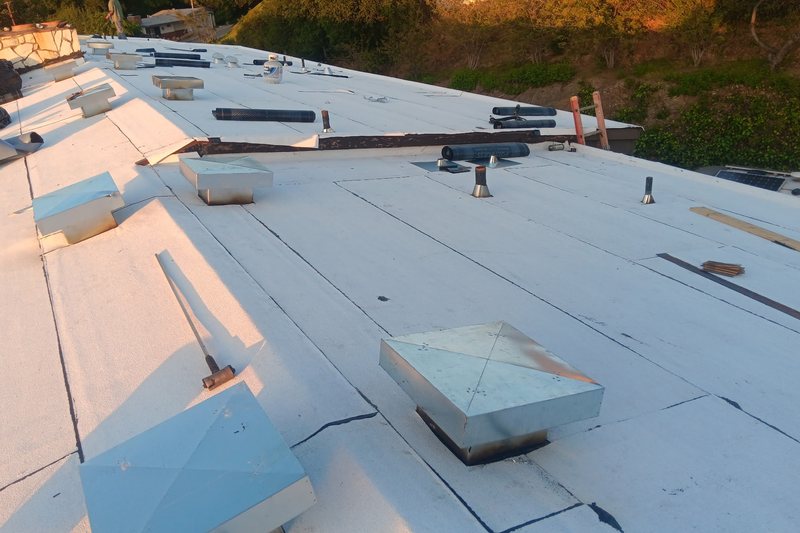
We write down what we find before we quote the work. That record includes the size of the wet area and the condition of each drain. It also includes any soft spot we can feel underfoot.
Standing water is normal for a day after heavy rainfall. Water that remains days later points to a drainage problem instead. We look for that cause before discussing scope.
Perimeters matter as much as the open field. Wind pulls hardest at the edge and along the parapet. A loose termination bar or loose edge metal can open a seam.
Slope arrives from the structural deck or from tapered insulation above it. Either way, the water needs a continuous path toward a drain. A blocked path leaves the roof holding that water.
Scuppers and overflow openings serve as the backup drainage. They only work when the opening stays clear and the membrane around it holds. We check them whenever we check a primary drain.
- Low spots that stay damp long after the roof surface dries
- The condition of drains, scuppers and overflow openings
- Soft or springy spots that suggest trapped moisture
- Edge metal and parapet transitions around the perimeter
- Older patches, mastic and coatings applied over past leaks
- Debris and gravel blocking the path toward a drain
Build a commercial scope before comparing proposals
Ask every bidder to name the membrane thickness and the attachment method. Find out what flashing and drainage work the bid covers, and how it handles the existing layers. Put the permit questions in the same document, because one shared scope makes two proposals genuinely comparable.
Two proposals can name the same membrane and still describe very different work. The difference usually sits in the detail work around drains, curbs and edges. That is where the cost and the risk actually live.
Send the same information to everyone you ask. Then every bid answers the same questions, and the comparison stays honest. You end up comparing scope instead of writing style.
When you call, you reach our team directly, and we do the roofing work ourselves. We can begin a commercial estimate from current satellite imagery and the details you describe.
We help property owners pull permits for applicable work. The City lists re-roof work among projects that require Building Safety permits. Check it for the current requirements.
Call us first when water is actively entering the building. Send scope questions in writing when nothing is urgent and the details can wait. Tell us the roof size and where the water shows up inside.
- Write down what you see, including stains inside and standing water above
- Call or send the form, then explain the roof size and where the trouble shows
- Ask about the details that matter: welds, flashings, drains, penetrations and existing layers
- Get the scope in writing, and make sure it names the plan for the existing layers
- Check the City permit page for current guidance before work starts
Frequently asked questions
What problems can develop on a TPO roof?
A pinhole at a curb corner, a loosened clamp at a pipe base, or a puncture from a dropped tool. Drains and parapet terminations open up too, and wet insulation below holds the moisture afterward. Not every stain is the membrane, since a rooftop unit can release water from its own pan.
Can a TPO membrane be repaired?
Yes, when the welds still hold and only a few flashings have opened. We re-weld the seam, rebuild the flashing, or patch the puncture with matching membrane. Wet insulation and a worn-out top surface point to replacement instead.
What should a TPO roofing scope include?
Membrane thickness, the attachment method, and the plan for the existing layers all belong in writing. Spell out the flashing and drainage work at drains, curbs and edges, since that is where the cost sits. Add the permit questions, then compare prices only after both bidders finish their scopes.
Local roofing contact
Culver City Roofing Contractors
Culver City Roofing Contractors
Culver City, CA
(424) 672-3864
Open daily from 8 AM to 8 PM.